
Surfaces and Volumes
There is a complex and shifting relation between the body image – the surface – and the body schema – how we inhabit the image

Dear Readers,
If you believe in the value of quality writing and the importance of creating a space for curiosity, critical thought, and meaningful dialogue, your subscription makes that possible.
Join as a paid subscriber to help build a community that values ideas, reflection, and the exploration of what it means to be human.
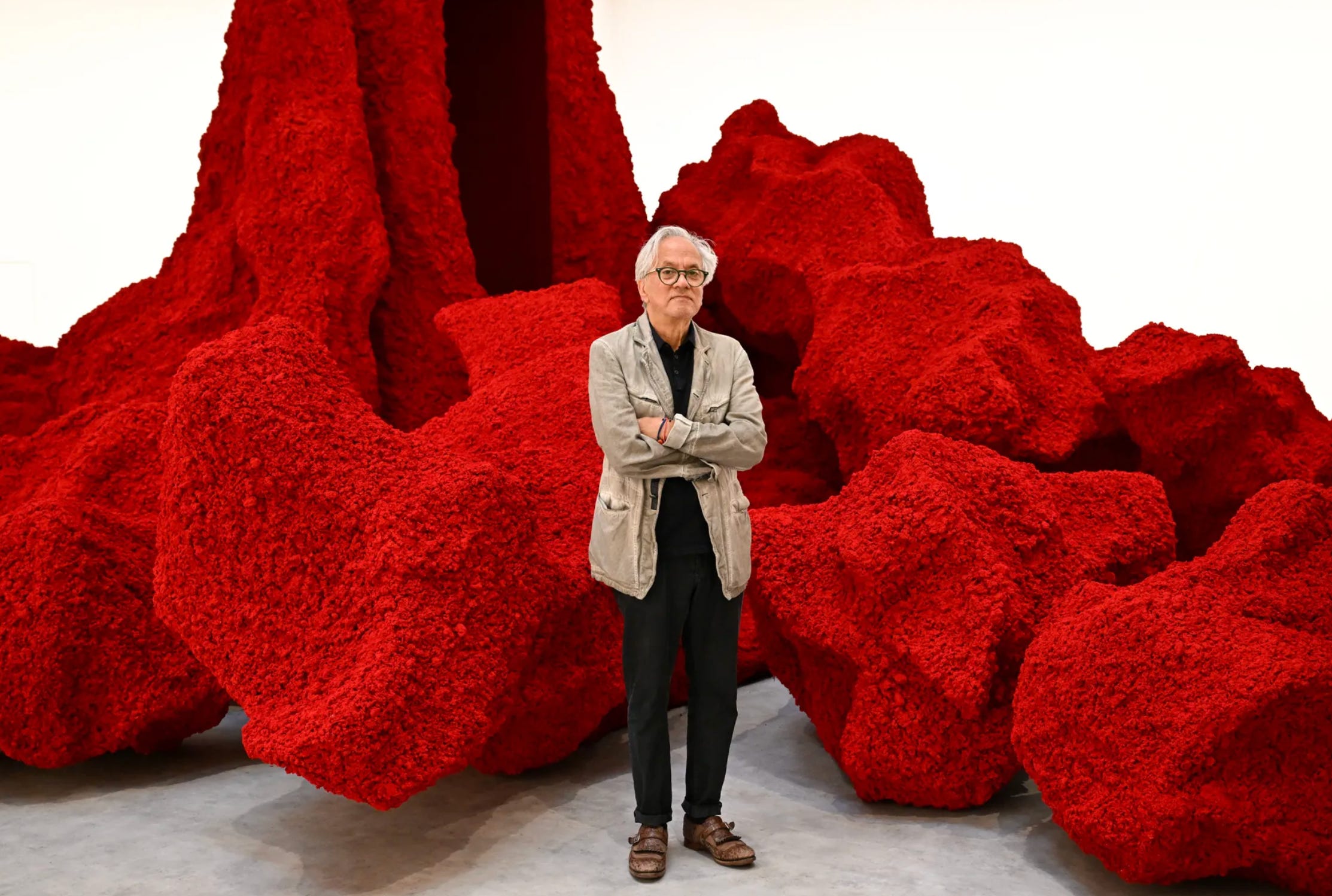
(Image: Anish Kapoor returns to the Hayward Gallery, the place where he staged his first major UK exhibition almost 30 years ago.)
(Image credit: Getty Images)
Many people spend their lives oscillating between problems of surface and problems of volume. How do I look in the mirror? Does this selfie look ok? Why do I feel so heavy or large or sluggish? Sometimes, if the surface looks right, it impacts the experience of volume: the mirror image is fine, and now I feel less heavy. There is a complex and shifting relation between the body image – the surface – and the body schema – how we inhabit the image.
Artists often explore this tension, and it is palpable throughout Anish Kapoor’s show at the Hayward Gallery in London. As we enter, our passage is blocked by a huge inflatable, like a giant balloon or bladder, making us even more aware of our position in space and evoking, among other things, the internal organs of the body that normally escape our visual field. His well-known ‘void works’ in the adjacent room play with sensations of surface and depth, as we are unsure whether a black patch is a hole or simply a flat surface.
The rest of the show is filled with massy, silicone viscera, globules of flesh, blood and tissue, either spilling over metal structures or tightly packed into PVC, creating a panorama of horror and carnage. Next to these are flat paintings, which include motifs that we find in the sculptures, and which bear collectively the same title. Why this strange and disturbing juxtaposition? And what can this tell us about the relation of surface to volume?
Having read hundreds and hundreds of pages of the Kapoor literature preparing for an in conversation with the artist last week, I was blown away by Marina Warner’s text, published a while back in Parkett magazine. Marina is not only a brilliant commentator and critic, but a remarkable writer, probably the only person out there who can use the word ‘diaper’ as a verb and get away with it.
